
FREESTYLE CHESS: THE FUTURE OF CHESS
ARTICLES
5/1/20262 min read
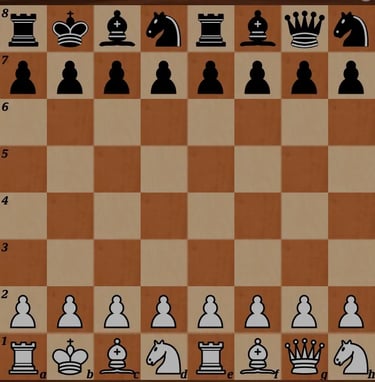
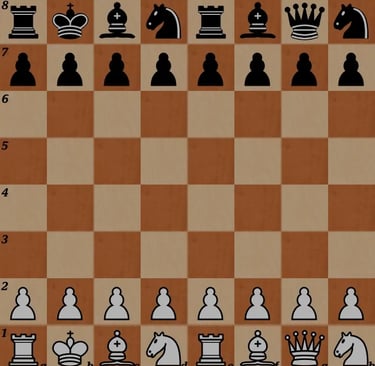
If you’ve ever felt like chess sometimes turns into a memory contest—who remembers more opening lines, who memorized deeper prep—you’re not alone. That frustration is exactly why something called freestyle chess has been gaining attention lately.
Chess960, also known as Fischer Random Chess, is a chess variant that randomizes the starting position of the pieces on the back rank. It was introduced by former world chess champion Bobby Fischer in 1996 to reduce the emphasis on opening preparation and to encourage creativity in play. Chess960 uses the same board and pieces as classical chess, but the starting position of the pieces on the players' home ranks is randomized, following certain rules. The random setup makes gaining an advantage through the memorization of openings unfeasible. Players instead must rely on their skill and creativity.
The biggest difference hits you immediately: you can’t rely on memorization. There’s no “I’ve seen this position 500 times before.” No comfort zone. No autopilot. From move one, you actually have to think.
That changes everything..........Games become more creative, more chaotic, and honestly more human. You see players figuring things out in real time instead of just blitzing out 20 moves of theory. For viewers, it’s way more exciting. For players, it’s way more honest. It levels the playing field.
In classical chess, top players spend insane amounts of time preparing openings with engines. If you’re not keeping up, you’re already behind before the game even begins—Freestyle chess wipes that advantage clean.
Now it’s about understanding, not memory. Pattern recognition, not preparation. Suddenly, a creative underdog has a real shot against someone who normally dominates through prep alone.
Even elite players like Magnus Carlsen have embraced it, because it rewards pure skill over homework. It brings the fun back.
Let’s be honest—sometimes chess can feel a bit… repetitive. Same openings. Same structures. Same ideas. Freestyle chess breaks that loop. Every game starts with a new puzzle. You get weird piece placements, unexpected tactics, and positions that look completely alien. It forces you to explore again, like you did when you first learned the game, And that’s a big deal.
But it’s not all easy and, Of course, it’s not perfect. For beginners, freestyle chess can feel overwhelming. In normal chess, at least you have some guidelines—control the center, develop pieces, castle early. In freestyle positions, those ideas don’t always apply in the same way. Even strong players can feel a bit lost at first. But that’s also kind of the point.
The future of chess?
Freestyle chess has been growing fast. Tournaments are popping up, top players are taking it seriously, and fans love the unpredictability.
Will it replace classical chess? Probably not. But it doesn’t need to. It offers something different—something that reminds people why chess is fun in the first place.
My Final thought?
I believe Freestyle chess strips the game down to its core. No scripts, no shortcuts—just two players, a strange position, and the challenge of figuring it out. And, in a world where everything is optimized and analyzed to death, that feels… pretty refreshing. That is how chess is supposed to be— a refreshing game to play.