HOW TO PLAY CHESS
-BY FLOAT CHESS.COM
SCROLL DOWN
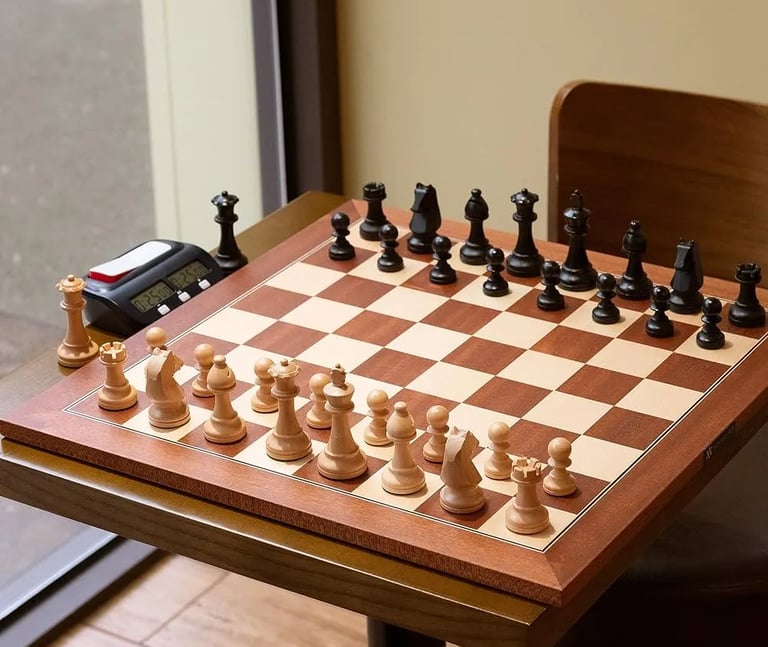
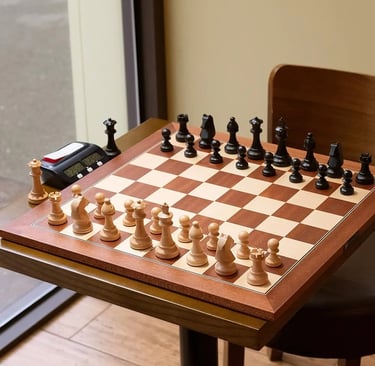
THIS IS HOW
LOOK LIKE
A CHESS BOARD
THINGS TO REMEMBER
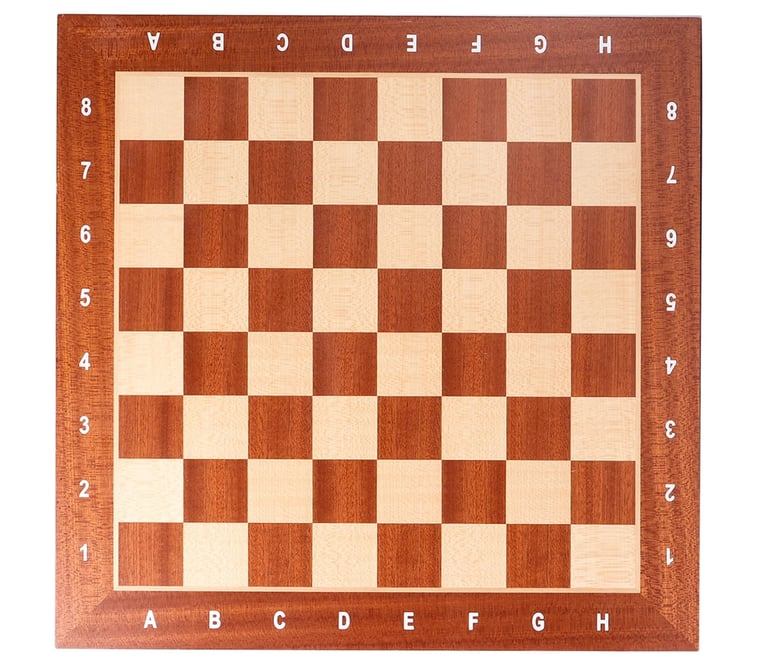
The board has 64 squares (8×8)
32 light squares and 32 dark squares
The board is labeled with letters (a–h) and numbers (1–8)
Horizontal rows (1–8) are called ranks
Vertical columns (a–h) are called files
LET'S LOOK AT THE PIECES
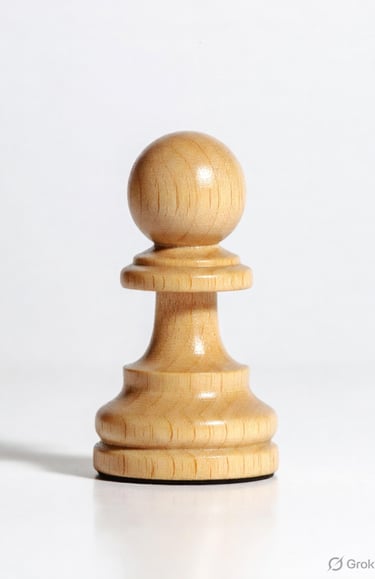
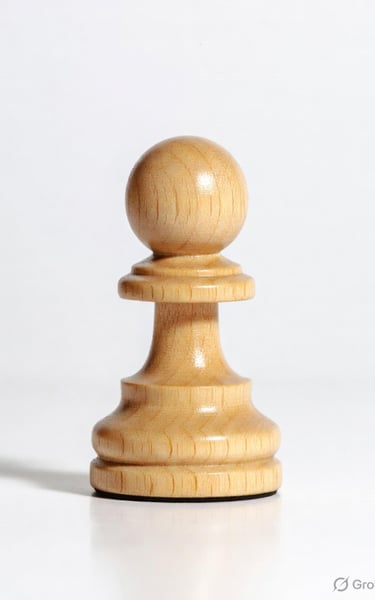
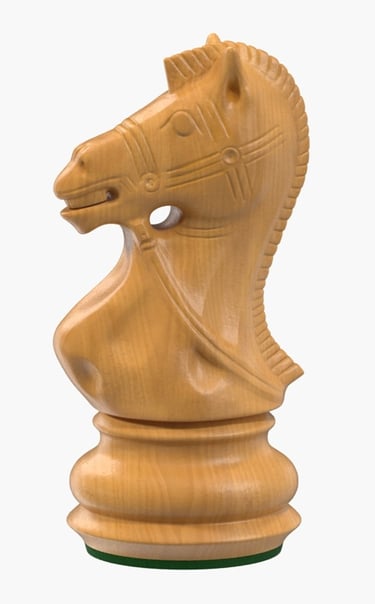
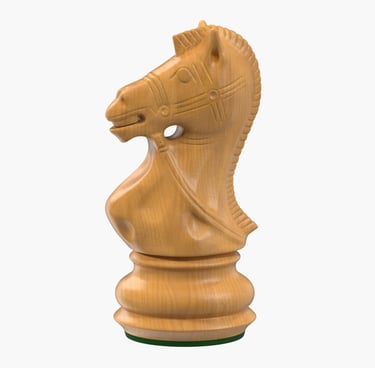
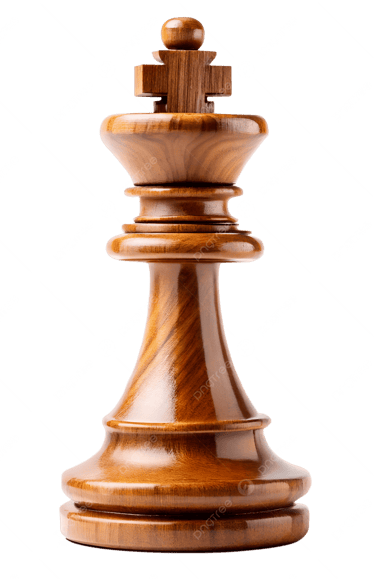
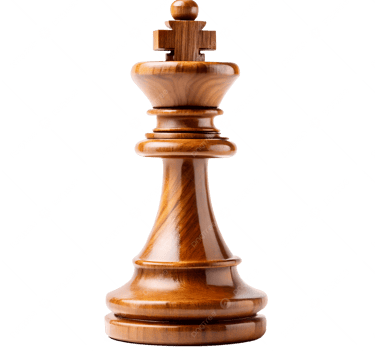
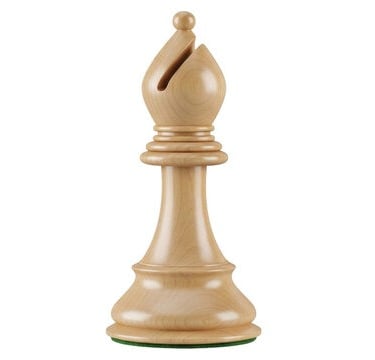
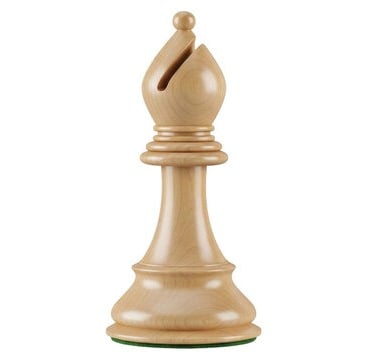
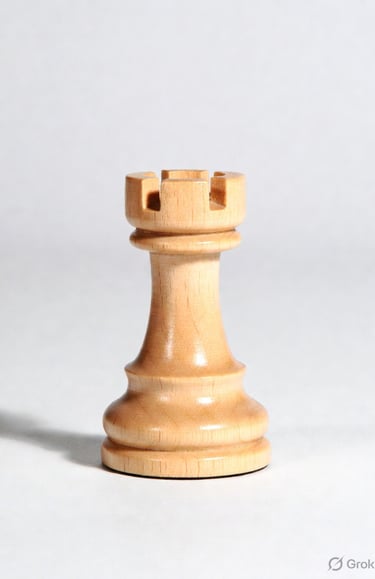
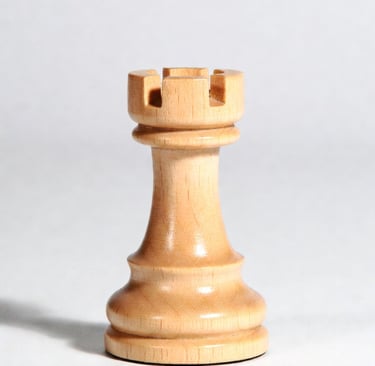
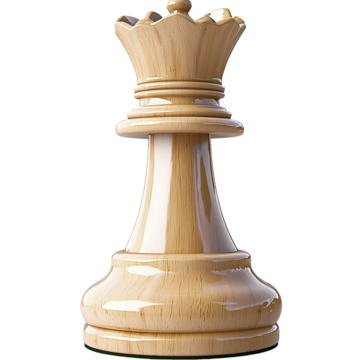
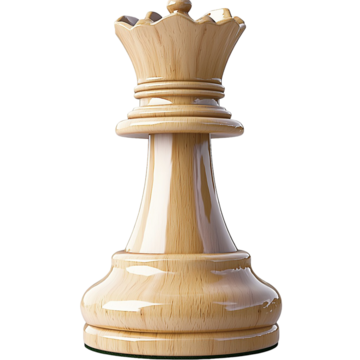
LETS LOOK AT ONE BY ONE
KNIGHT
BISHOP
PAWN
ROOK
QUEEN
KING
LET'S START WITH PAWN
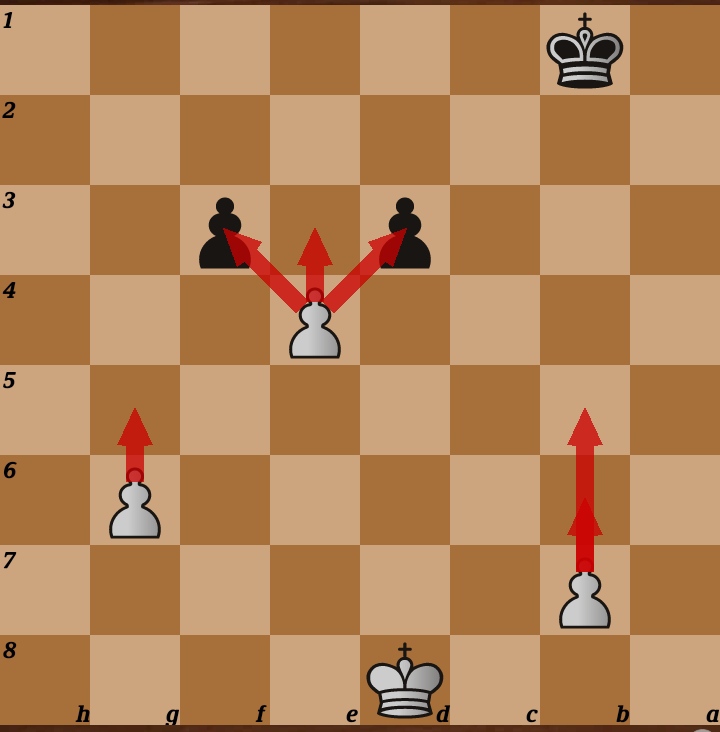
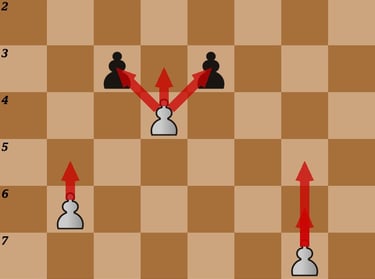
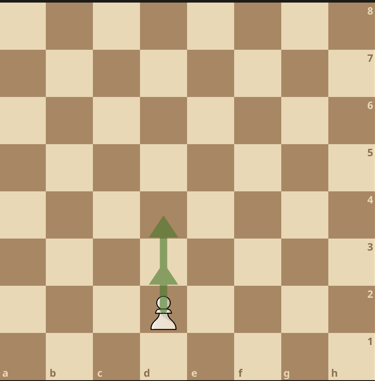
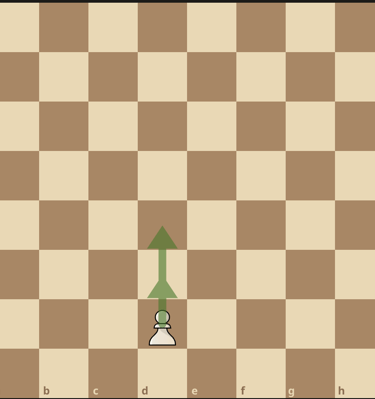
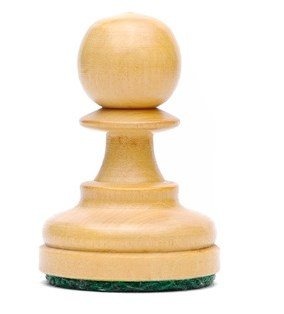
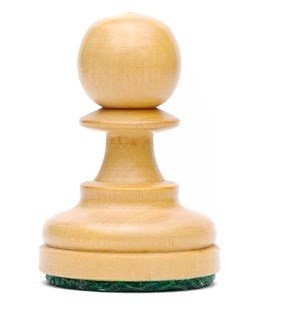
Pawns in chess move straight forward one square at a time, but can move two squares on their first move. Also, pawns capture one square diagonally.
MOVEMENT
Pawn promotion:
When a pawn reaches the opposite end of the board, it must be replaced with a piece other than the king as per the player's choice.
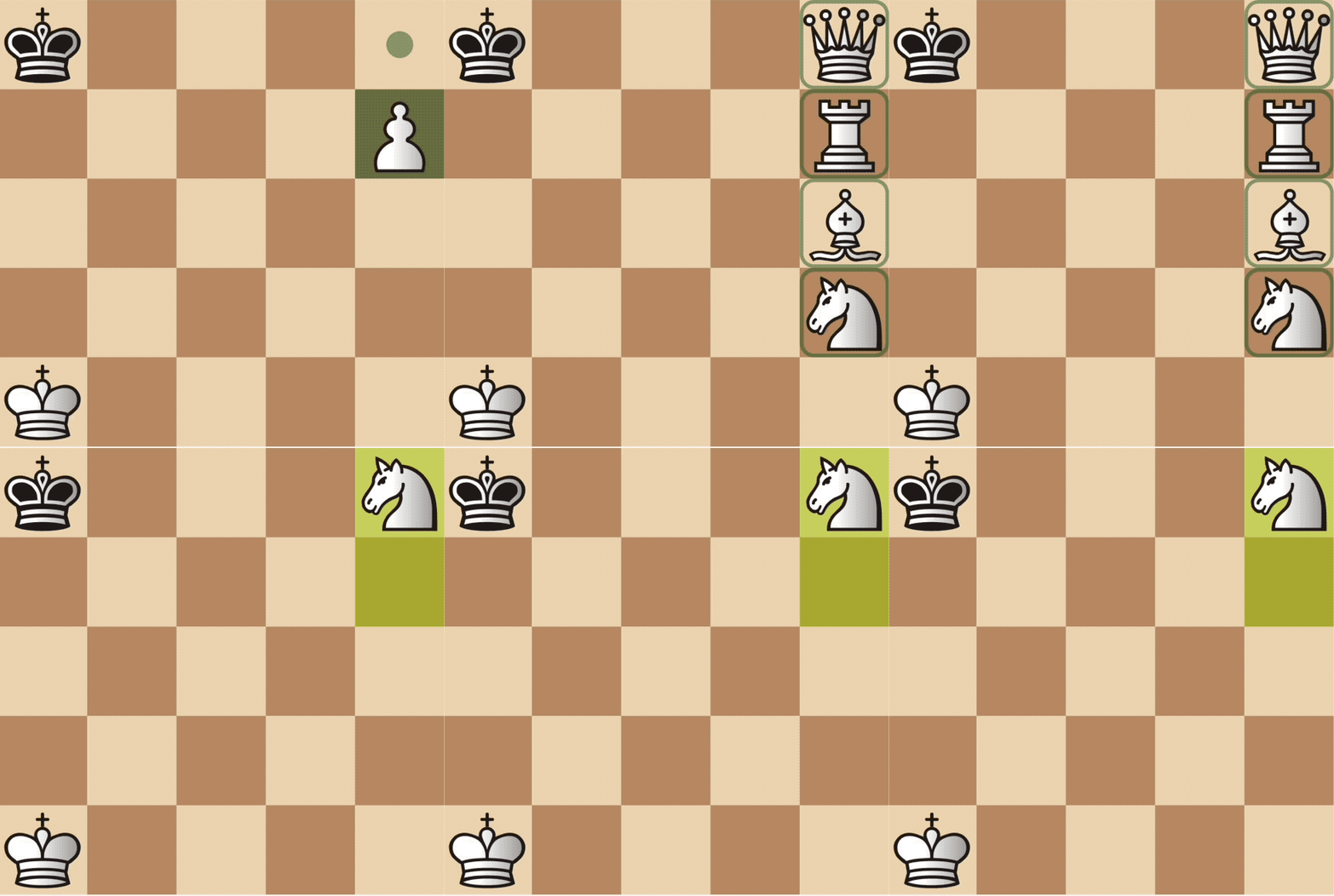
ATTACK BY THE PAWN
MOVEMENT
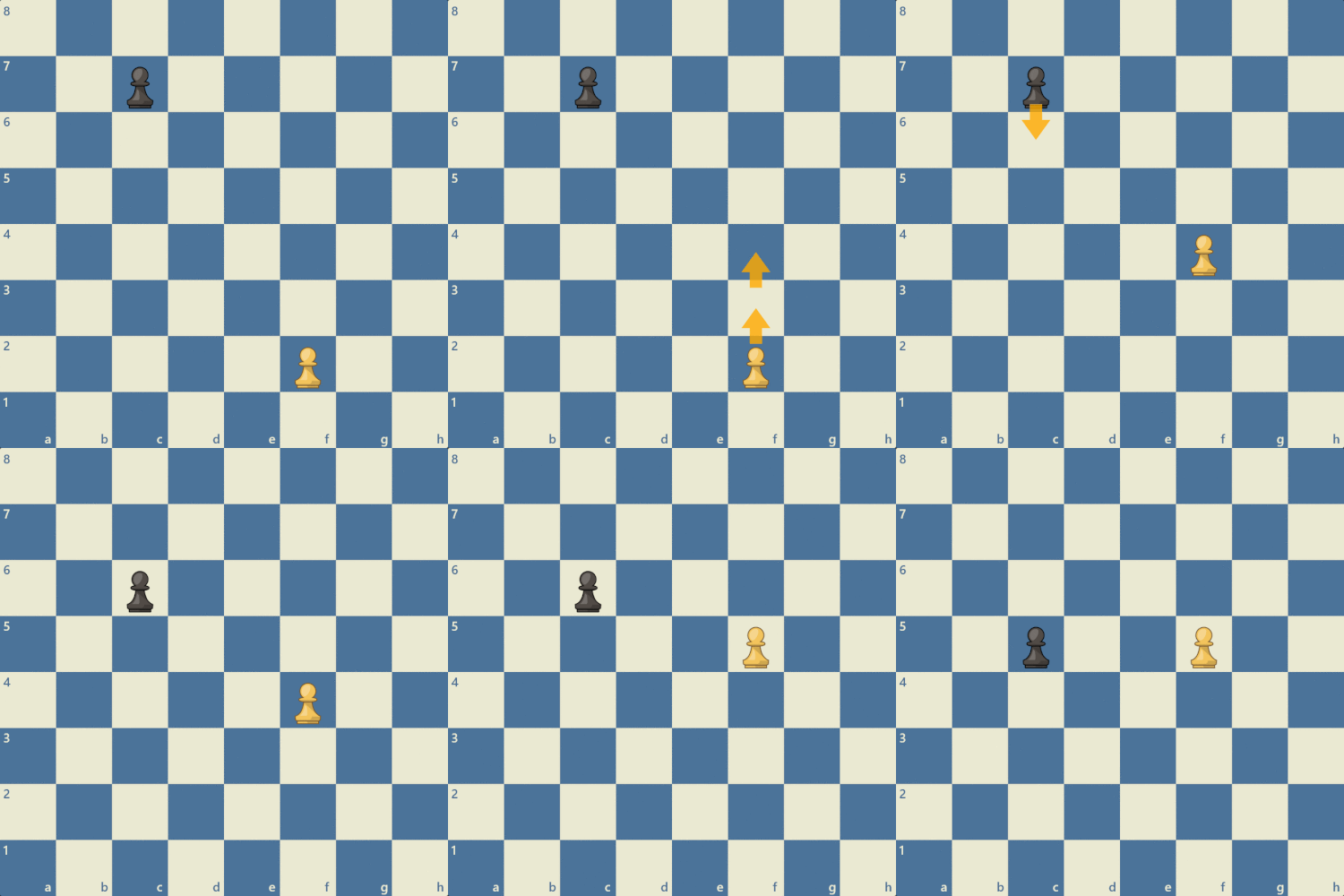
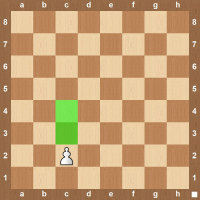
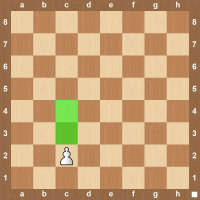
A pawn moves straight forward only.
It moves 1 square forward normally.
On its first move, it can move 2 squares forward.
It cannot move sideways or backward.
It cannot move forward if a piece is blocking the square in front of it.
NEXT LET'S LEARN ABOUT KNIGHT
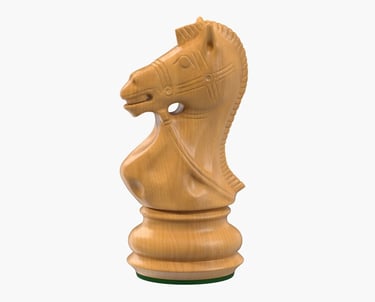
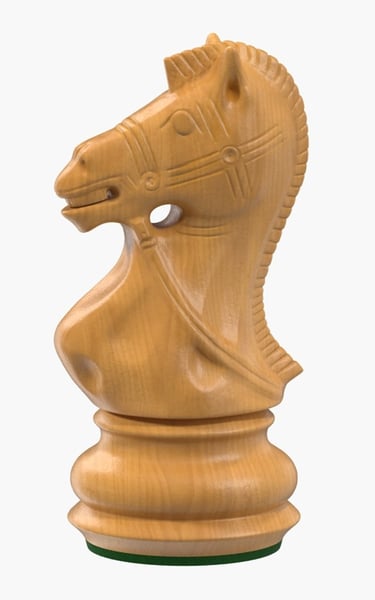
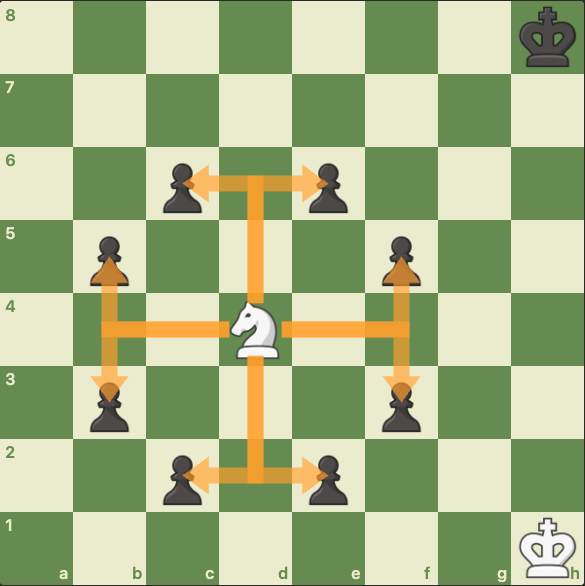
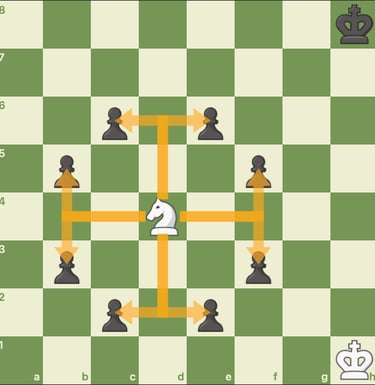
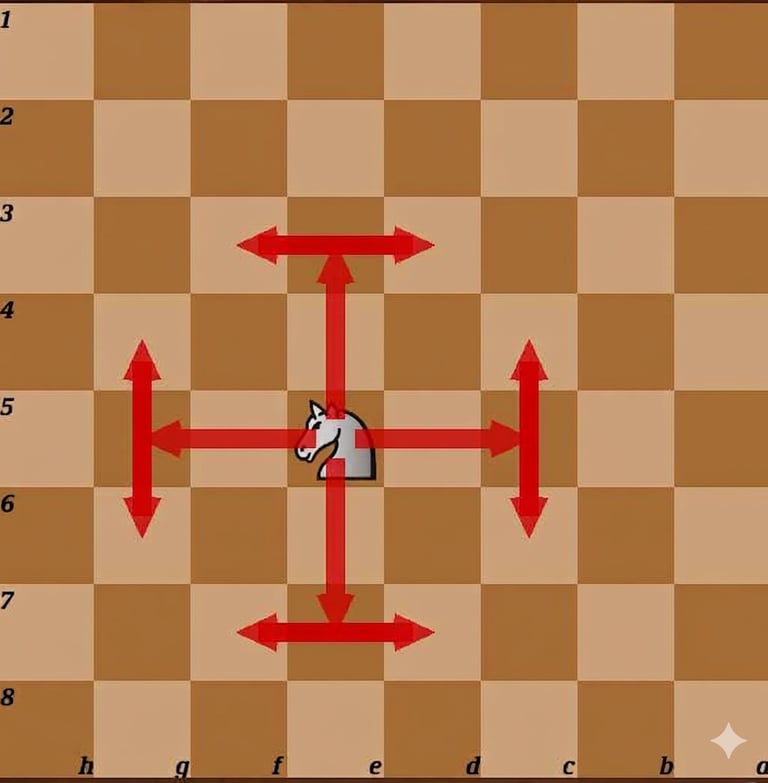
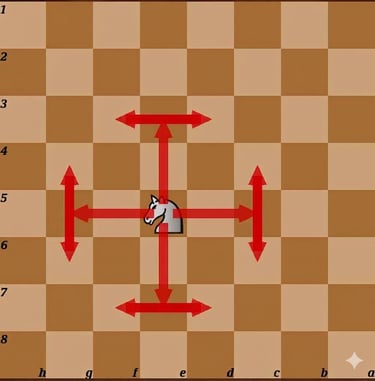
Knights in chess are the most unique. They move in a 'L' shape in all directions. This peculiar movement allows them to basically jump over pieces.
BISHOP
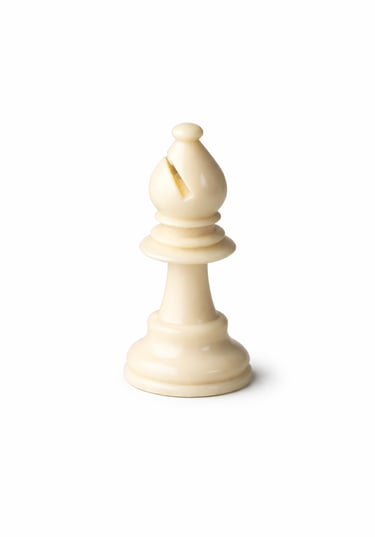
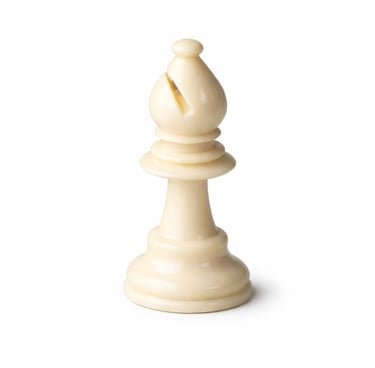
Bishops in chess move along diagonals. The dark square Bishops remain in dark squares while the light square Bishops remain in light squares.
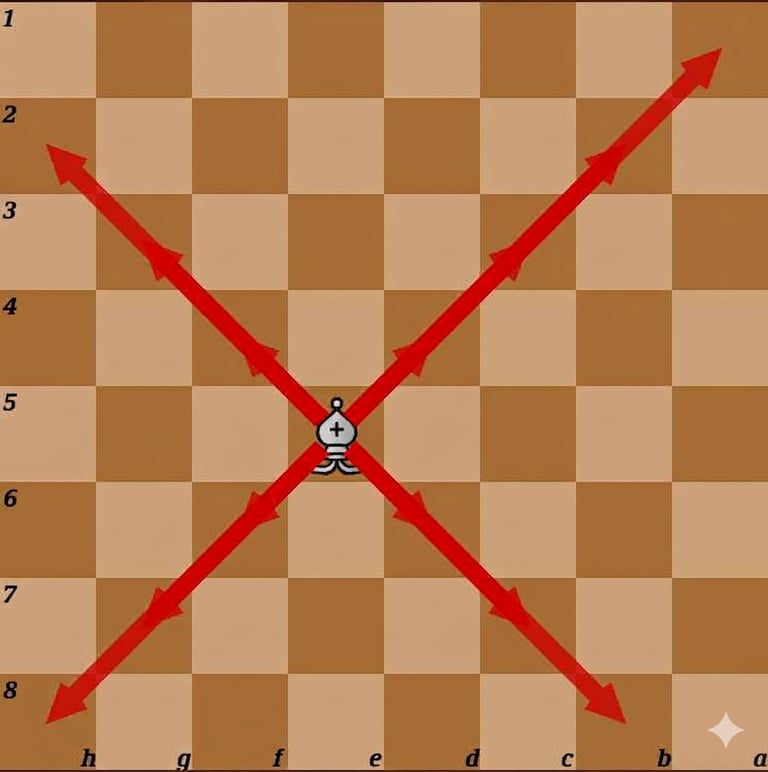
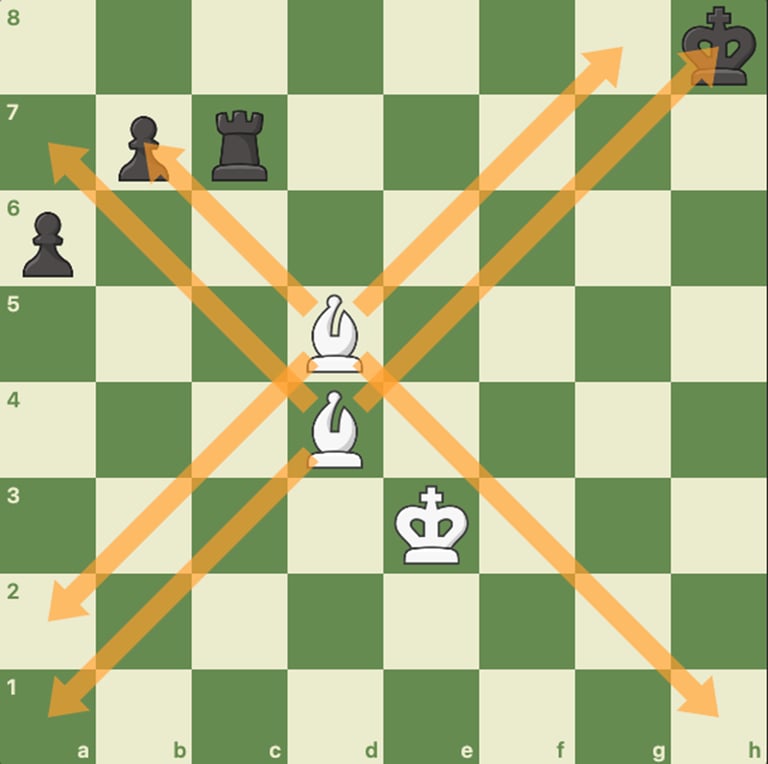
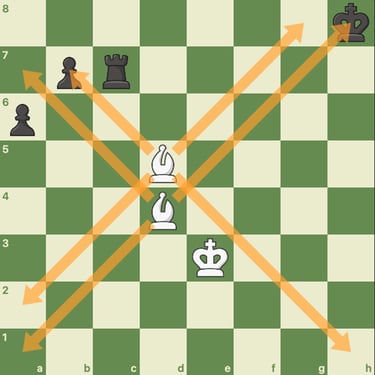
Each player starts with two bishops.
Bishops move diagonally across the board.
One bishop stays on light squares, the other on dark squares.
They are powerful in open positions because they can cover long distances.
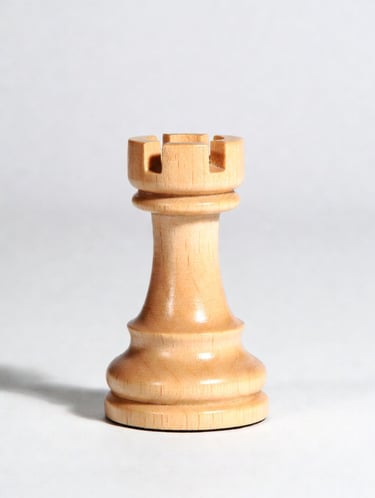
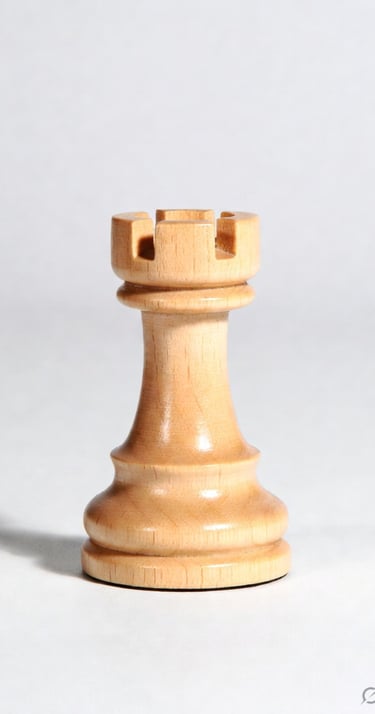
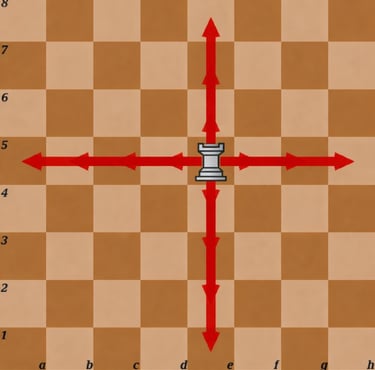
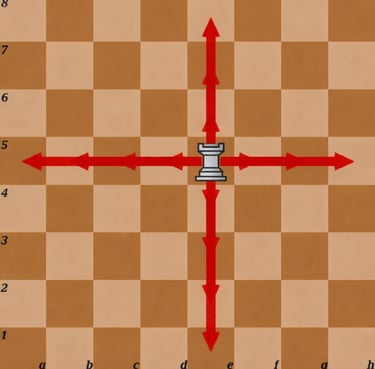
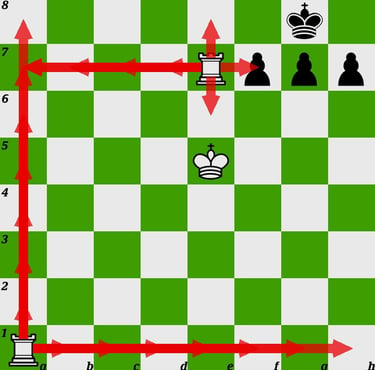
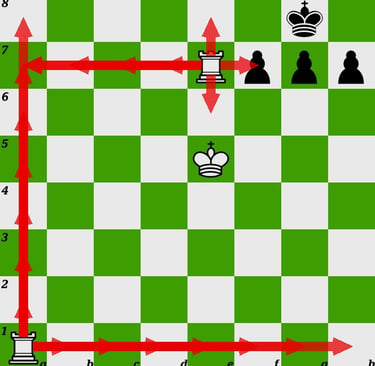
Rooks:
Rooks in chess move in a straight line; both horizontally across the row and vertically across the column
Movement:
The rook can move any number of squares forward, backward, left, or right, but not diagonally.Starting Position:
Each player starts with two rooks, placed in the corners:White rooks: a1 and h1
Black rooks: a8 and h8
Special Move — Castling:
The rook plays a key role in castling, a special move involving the king and rook that improves king safety and activates the rook.Strategic Use:
Strong on open files (columns with no pawns)
Very effective when connected (working together)
Often dominates in the endgame
Coordination:
Rooks are most powerful when they support each other or combine with the queen for attacks.
NEXT LET'S LEARN ABOUT KING
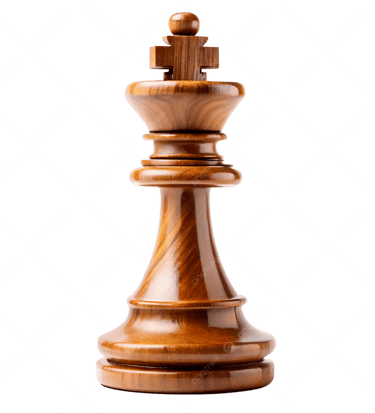
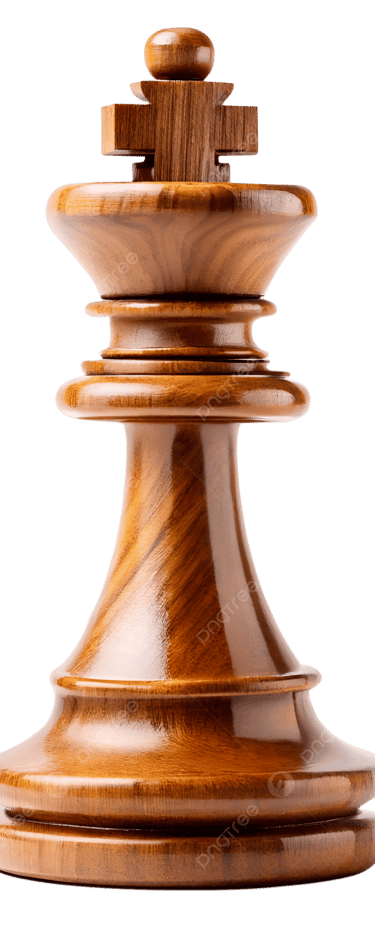
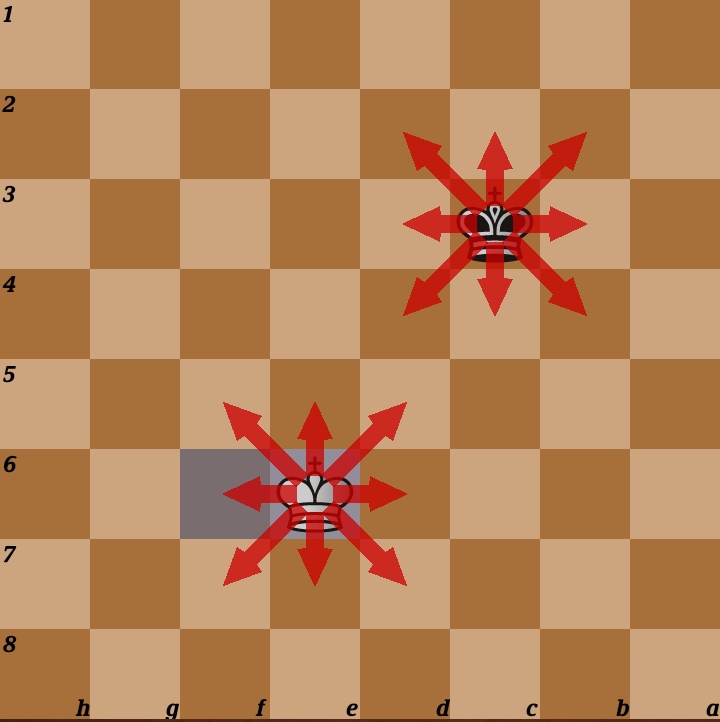
King:
It is the most important yet one of the weakest pieces. A king can move in all directions but only one square at a time.
However, a king has a special move called 'Castling'. A king can castle if the following conditions are met:
1. The king is not moved yet from its starting position
2. One of the Rooks is not moved from its original position
If these two conditions are met then the king can move two squares to the right or three squares to the left. Also, after castling, the rook towards which the king castles comes to the other side of the king
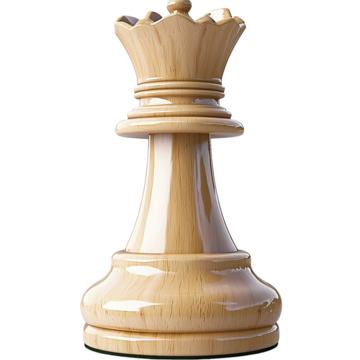
Queen:
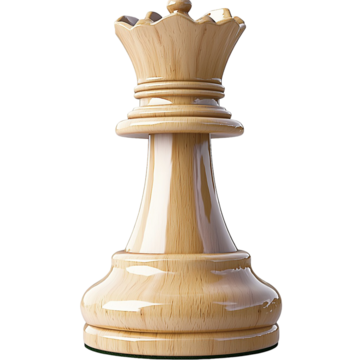
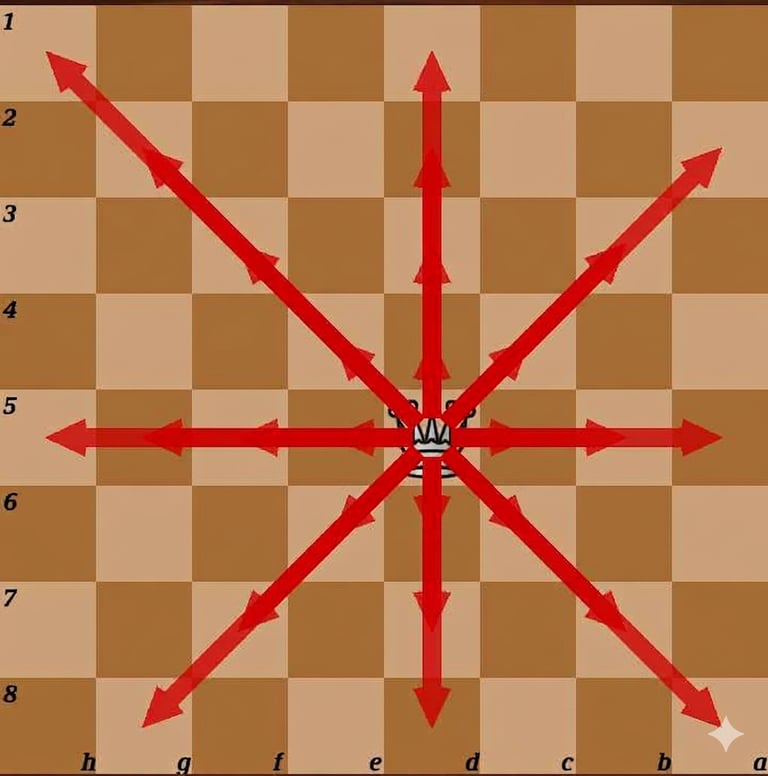
The Queen in chess is the most powerful piece. It moves in all directions across diagonals, rows and columns. It basically combines the movement of both Rooks and Bishops.
Queen
Movement:
The queen combines the moves of a rook and a bishop—it can move in straight lines and diagonals across the board.Starting Position:
Each player begins with one queen placed on its own color:White queen on a white square (d1)
Black queen on a black square (d8)
Role in the Game:
Strong in attacks and checkmates
Controls large areas of the board
Often used to support other pieces
Strategic Use:
Avoid bringing the queen out too early, as it can be easily attacked
Use it effectively in the middle and endgame
Works best when coordinated with rooks and bishops
Special Move: Castling
Castling is the only move that lets you get two pieces off the board in one turn.
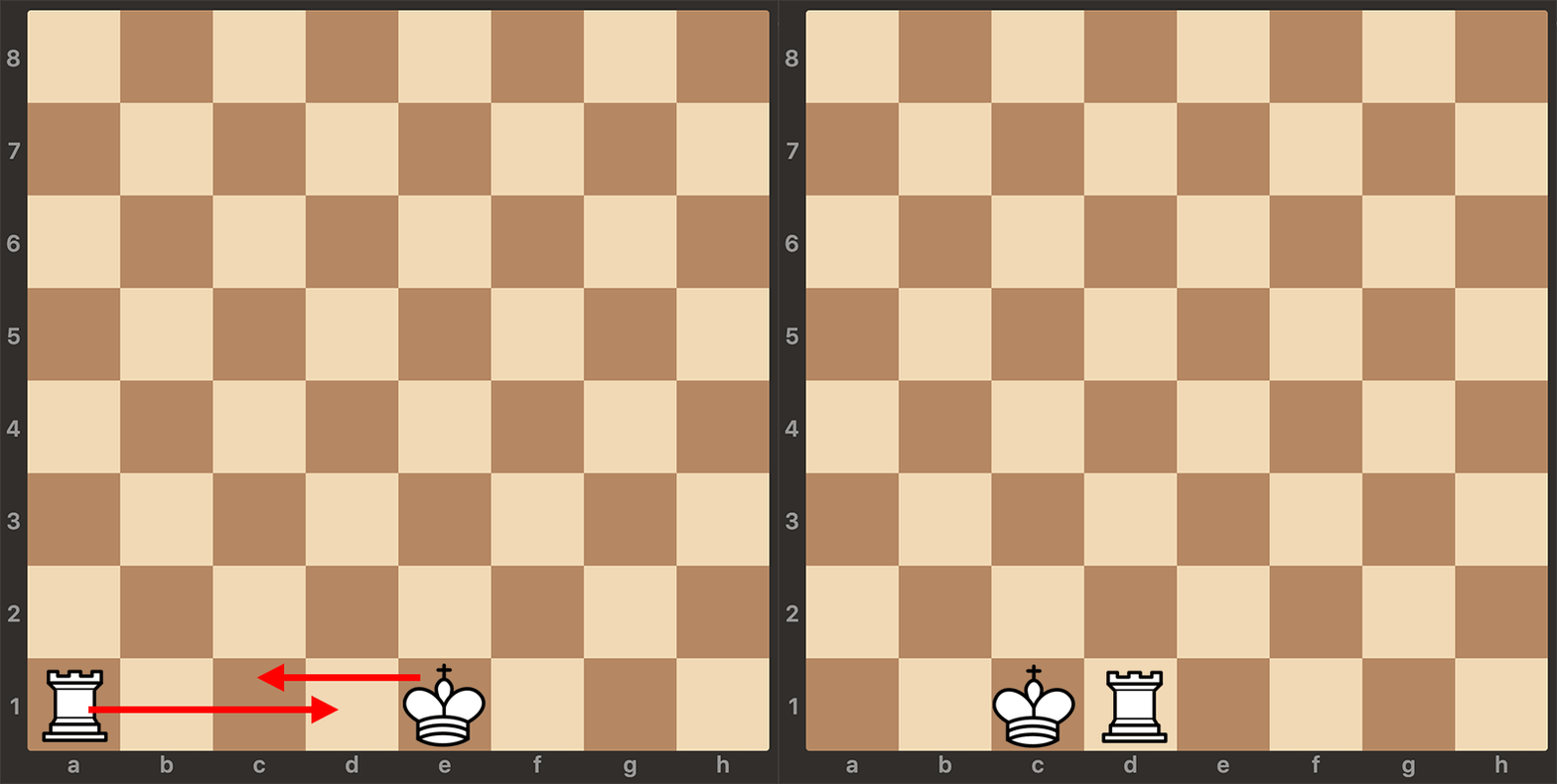
When you castle, the king scoots two spaces toward the rook it’s going to castle with, and the rook hops over to the other side. The king can castle on either side as long as:
1. The king hasn’t moved yet.
2. The king isn't in check.
3. The king doesn’t slide through or into check.
4. There’s nothing in between the king and the rook on the side you want to castle.
5. The rook you’re castling with hasn’t moved yet.
What doesn’t matter:
A. If the king was in check but isn’t anymore.
B. If the rook can get attacked by an opponent's piece before you castle.
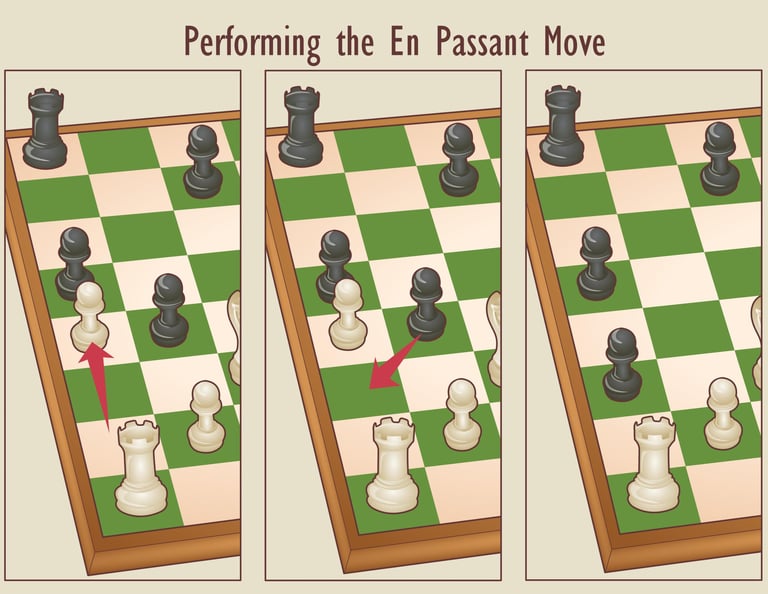
Special Move: En Passant
En-Passant:
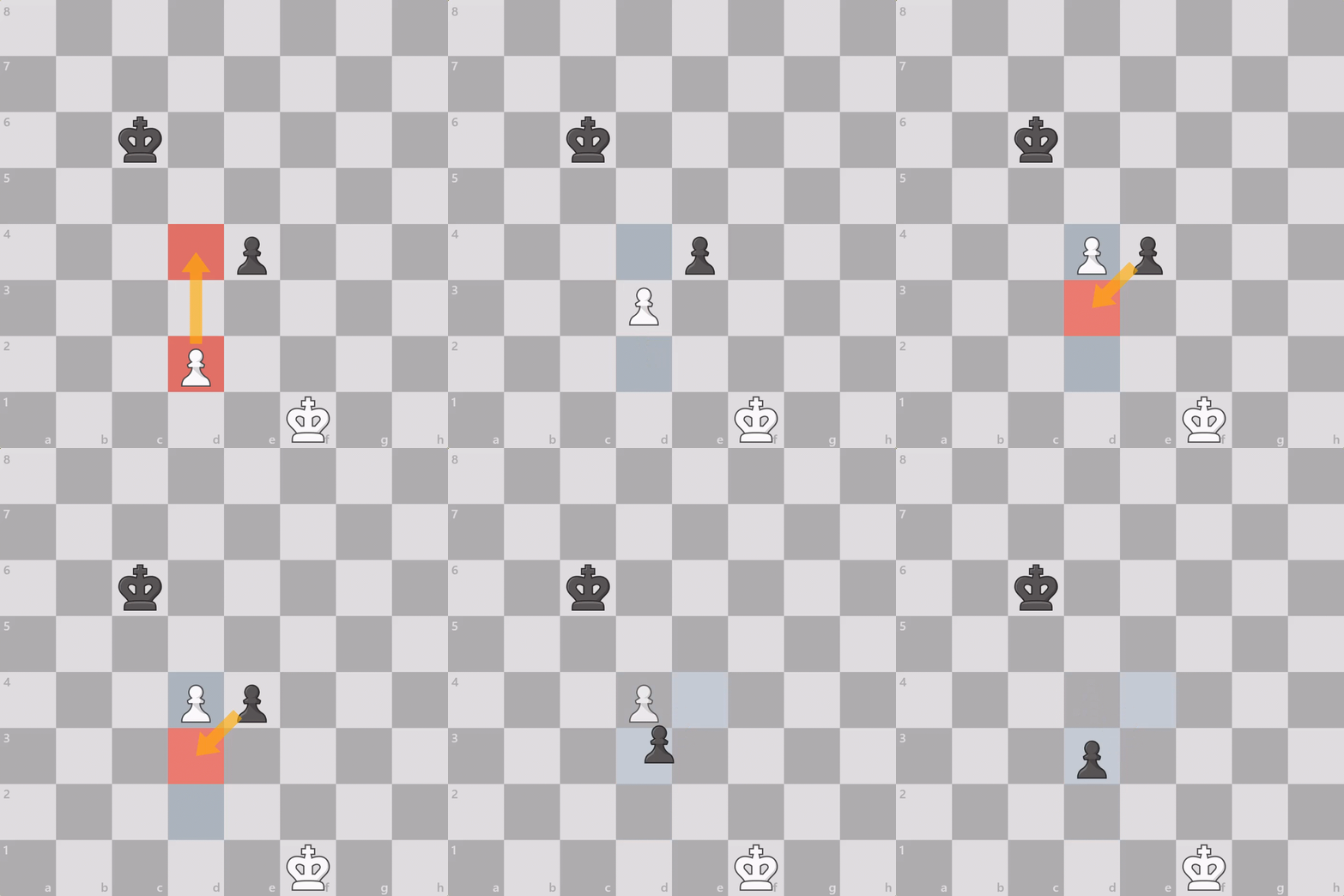
En-Passant is a very special type of move made by the pawn. It requires specific circumstances. They are:
1. A white pawn is in the 5th rank ,or a Black pawn is in the 4th rank.
2. A opposite colour pawn moves two squares from the initial position in such manner that if it had moved one square than the other pawn could have captured it.
In such circumstances, a pawn can capture the enemy pawn as if it moved one square instead of two.
However, this move must be played immediately after the pawn is moved two squares. Else it will become an illegal move.
Check
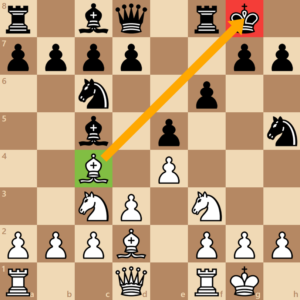
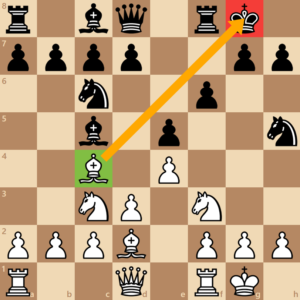
Check (in chess) is a situation where the king is under attack by an opponent’s piece.
When a king is in check, the player must remove the check immediately by:
Moving the king
Blocking the check
Capturing the attacking piece
In one line:
Check is when the king is attacked and must be protected on the next move.
Double Check
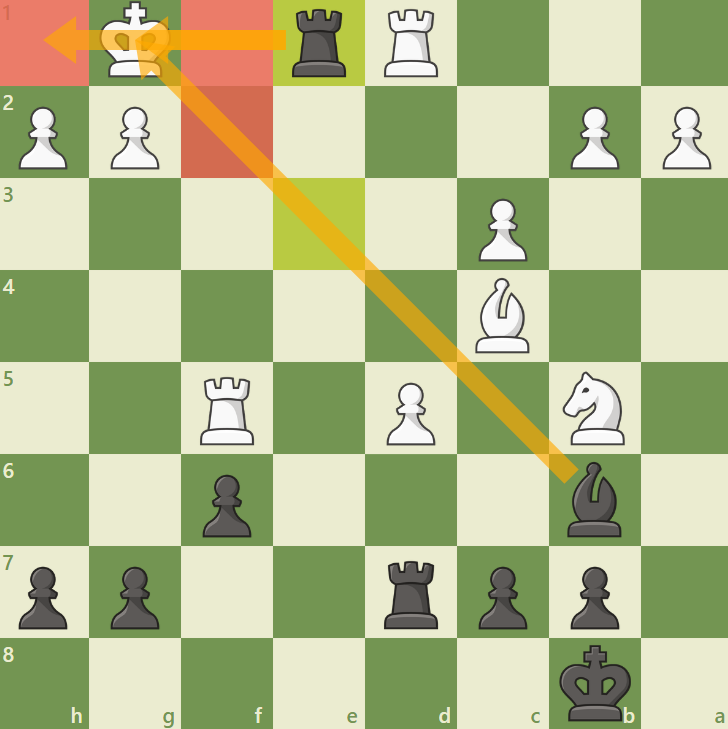
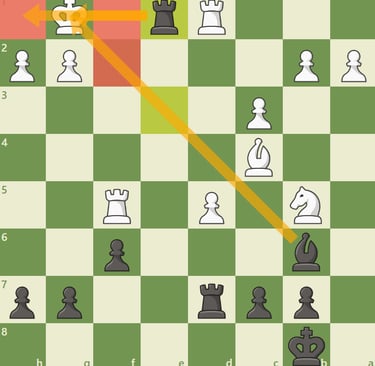
King attacked by 2 pieces at the same time
Checkmate
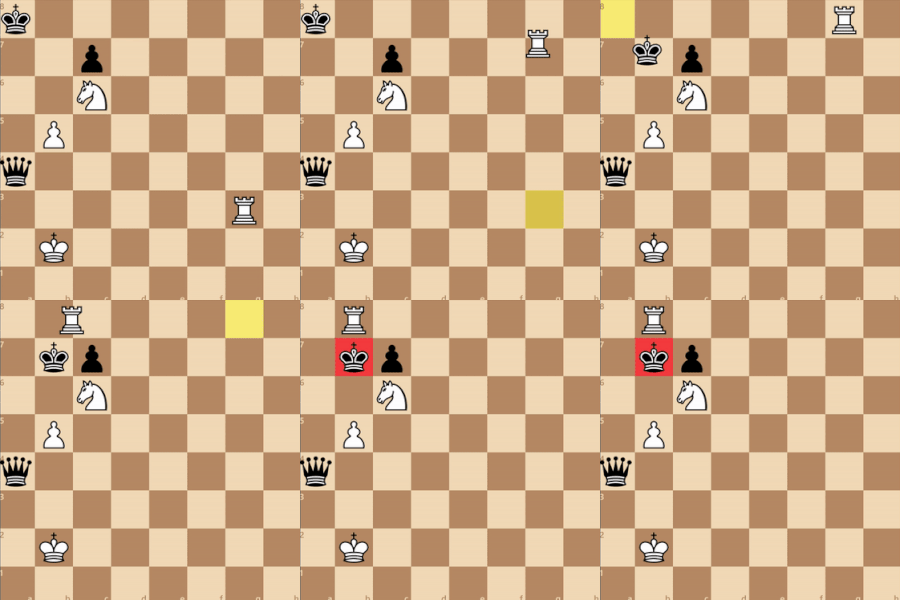
Checkmate is how you win a game of chess.
It happens when your opponent’s king is in check (meaning it is under attack), and there is no way to escape. This means:
The king cannot move to any safe square (every possible square is still under attack).
The attacking piece cannot be captured.
The attack cannot be blocked by putting another piece in between.
When all these conditions are true, the king is trapped, and the game is over — that’s checkmate.
Stalemate
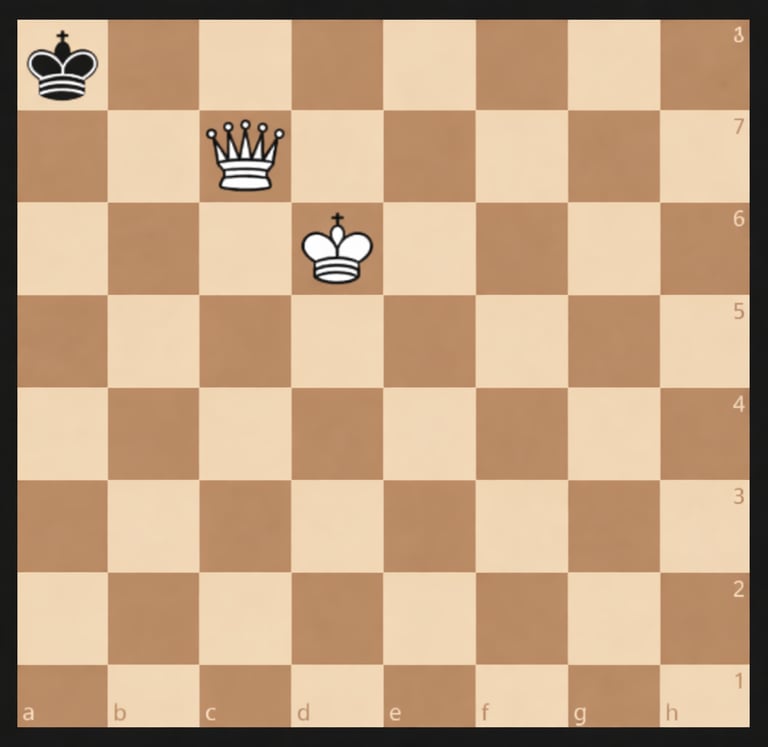
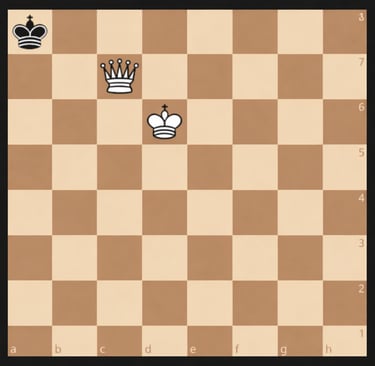
Stalemate (in chess) is a situation where:
The player to move is not in check
The player has no legal moves
The game ends in a draw
Short example:
If the king cannot move anywhere without going into check, and no other pieces can move, but the king is not currently in check, then it is stalemate.
Stalemate is a draw when a player has no legal move and is not in check.
Basic Strategy and Principles
Basic principles:
In order to be able to checkmate the opponent king, we must first pass through many intermediate stages.
ACTIVITY IS EVERYTHING :
At the start, we must try to make our pieces as active as possible.
1.This usually translates to putting our pawns in the centre and defending them with our pieces.
2. Later, we can advance our pawns and put our pieces in the centre for active play.
Basic principles:
In order to be able to checkmate the opponent king, we must first pass through many intermediate stages.
ACTIVITY IS EVERYTHING :
At the start, we must try to make our pieces as active as possible.
1.This usually translates to putting our pawns in the centre and defending them with our pieces.
2. Later, we can advance our pawns and put our pieces in the centre for active play.
PROTECT OWN KING:
It is easy to forget that our opponent is also trying to checkmate our king. We must protect our own king at the same time as trying to checkmate our opponent.
1. The most important step for protecting the king is castling our king. This also activates the Rook.
2.Making sure our own king is not under any threat before proceeding a move is important.
EVALUATION OF POSITION:
We need to constantly evaluate the position after every move. To do that,we must observe the indices:
1. Whose King is more safe.
2. Who has more material.
3. Whose piece activity is more.
The value and weight of each matrix changes depending on the position type , and there is no solid formula to figure that out.
EXPLORE OUR WEBSITE
UNLOCK YOUR POTENTIAL
Learn Chess – Beginner's Complete Guide on Float Chess
Chess is one of the greatest games ever invented. Two players. 32 pieces. 64 squares. Unlimited possibilities.
If you are a complete beginner, this page teaches you everything you need to start playing chess today. Float Chess breaks it all down step by step in plain, simple language. Read each section, then go practice on our free chess board.
Step 1 – The Chess Board Setup
A chess board has 64 squares arranged in 8 rows and 8 columns. The squares alternate between light and dark colors.
Always place the board so that a light square is in the bottom right corner closest to you.
Each player starts with 16 pieces arranged on the first two rows in front of them:
Row 1 contains your main pieces — rooks, knights, bishops, queen, and king
Row 2 contains all 8 of your pawns lined up across the board
The correct order for Row 1 from left to right is: Rook, Knight, Bishop, Queen, King, Bishop, Knight, Rook.
One important tip — the chess queen always goes on her own color. The white queen goes on a light square and the black queen goes on a dark square.
Step 2 – The Chess Pieces and How They Move
There are 6 different chess pieces. Each one moves in a completely different way.
The King
The king is the most important piece in chess. If your king is trapped and cannot escape, the game is over.
The king moves one square in any direction — forward, backward, sideways, or diagonal. The king cannot move to a square where it would be under attack.
The Queen
The queen is the most powerful piece on the chess board. She can move any number of squares in any direction — forward, backward, sideways, or diagonal.
Protect your queen carefully. Losing your queen early in a chess game makes winning very difficult.
The Rook
The rook moves any number of squares but only in straight lines — forward, backward, left, or right. It cannot move diagonally.
Two rooks working together on open files are extremely powerful in chess.
The Bishop
The bishop moves any number of squares diagonally only. It never changes the color of square it started on.
Each player starts with two bishops — one on a light square and one on a dark square.
The Knight
The knight is the only chess piece that can jump over other pieces. It moves in an L-shape — two squares in one direction and then one square to the side.
The knight's ability to jump makes it unique and very tricky to play against.
The Pawn
Pawns move forward one square at a time. On their very first move they can move two squares forward. Pawns capture diagonally, not straight ahead.
When a pawn reaches the last row on the opposite side of the chess board, it promotes — it becomes any piece you want, almost always a queen.
Step 3 – Special Chess Rules Every Beginner Must Know
There are three special moves in chess that confuse many beginners. Here they are explained simply.
Castling in Chess
Castling is a special move that lets you move your king to safety and bring your rook into play at the same time.
To castle in chess, these conditions must all be true:
Your king has not moved yet in the game
The chosen rook has not moved yet in the game
There are no pieces between the king and the rook
Your king is not currently in check
Your king does not pass through or land on an attacked square
To castle, move your king two squares toward the rook. The rook then jumps to the other side of the king automatically.
Castling early is one of the best habits a beginner can build in chess.
En Passant
En passant is a special pawn capture. If your opponent moves a pawn two squares forward from its starting position and it lands beside your pawn, you can capture it as if it had only moved one square.
This capture must be made immediately on the very next move or the opportunity is gone.
Pawn Promotion
When your pawn reaches the last row on your opponent's side of the chess board, it must be promoted. You can choose a queen, rook, bishop, or knight. Almost every player chooses a queen because it is the strongest piece.
Step 4 – Check, Checkmate, and Stalemate
These three terms are essential for every chess beginner to understand.
Check
Your king is in check when an opponent's piece is attacking it directly. When your king is in check you must deal with it immediately. You have three options — move the king, block the attack, or capture the attacking piece.
Checkmate
Checkmate ends the chess game. Your king is in checkmate when it is in check and there is no legal move to escape. The player who delivers checkmate wins.
Stalemate
Stalemate happens when a player has no legal moves but their king is not in check. Stalemate is a draw — nobody wins. Be careful not to accidentally stalemate your opponent when you are winning a chess game.
Step 5 – Basic Chess Strategy for Beginners
Knowing how the pieces move is only the beginning. Strategy is what separates a beginner from an improving chess player.
Control the Center
The four central squares — e4, d4, e5, and d5 — are the most important squares on the chess board. Pieces placed in or near the center control more squares and are more powerful.
Always try to place your pawns and pieces toward the center in the opening.
Develop Your Pieces Early
Development means getting your knights and bishops off the back row and into active positions. Every move in the opening should bring a new piece into the game.
Do not move the same chess piece twice in the opening unless you absolutely have to.
Castle Early
Castling moves your king behind a wall of pawns where it is much safer. Most experienced chess players castle within the first 10 moves.
If you leave your king in the center of the board, your opponent can attack it from multiple directions.
Do Not Bring Your Queen Out Too Early
Many beginners rush their queen out in the first few moves. This is a mistake. Your opponent will chase your queen around the board with cheaper pieces, wasting all your time.
Develop your knights and bishops first, then bring your queen into the game when it is safe to do so.
Think Before Every Move
Before you move a chess piece, always ask yourself these three questions:
What is my opponent threatening right now?
Is the square I am moving to safe?
Does this move help my overall plan?
One second of thinking before each move prevents most beginner mistakes in chess.
Step 6 – Basic Chess Tactics Every Beginner Should Know
Tactics are short combinations of moves that win material or deliver checkmate. Learning these patterns will immediately improve your chess results.
The Fork
A fork is when one chess piece attacks two of your opponent's pieces at the same time. The knight is the best piece for forks because of its unusual movement.
The Pin
A pin is when you attack a piece that cannot move because moving it would expose a more valuable piece behind it. Pinning your opponent's pieces limits their options in the chess game.
The Skewer
A skewer is the opposite of a pin. You attack a valuable piece and when it moves, you capture the less valuable piece behind it.
Back Rank Checkmate
If your opponent's king is trapped on the back row by its own pawns, a rook or queen can deliver checkmate on that back rank. This is one of the most common checkmates in beginner chess games.
Step 7 – How to Get Better at Chess Fast
Here is the most effective routine for any chess beginner:
Play at least one chess game every day on Float Chess against the computer
Solve 5 to 10 chess tactics puzzles daily to train your pattern recognition
Review your games after playing and find the move where things went wrong
Study one chess opening and practice it until it feels natural
Watch one chess video per week from a strong player or coach
Read about famous checkmate patterns and try to spot them in your games
Consistency matters more than anything else in chess. A little practice every day adds up to big improvement over time.
Practice Everything You Learned Right Now
Float Chess gives you a free chess board where you can practice every lesson on this page instantly. No login needed. No download. Just open the board and start playing.
Start at a low computer level, focus on applying what you just read, and gradually increase the difficulty as your chess improves.
Every grandmaster in the world started exactly where you are right now — learning the basics one step at a time.
5 EXTERNAL LINKS TO ADD as hyperlinks
Chess.com Learn — https://www.chess.com/learn-how-to-play-chess
Chess Base — https://en.chessbase.com
FIDE Rules — https://www.fide.com/fide/handbook.html
Float Chess-https://www.floatchess.com