OPENING THEORY: THE JOBAVA SYSTEM
A detailed repertoire on the Jobava London System
OPENING
5/17/20263 min read
THE JOBAVA LONDON
The Jobava London system is named after the Georgian grandmaster Baadur Jobava, who had pioneered most of the common ideas in the opening. It is a very flexible system, where white can end up launching attacks on both the king and queenside.
The central idea behind the Jobava London system is to occupy the d4 square with a pawn and place the bishop on the f4 square, aiming to control the center of the board and put pressure on the opponent's pawns. Importantly, the knight goes to c3 in the Jobava London, and thus, allows for attacking chances on the pawn on c7 with the bishop.
One of the key advantages of the Jobava London system is that it allows for a quick development of the minor pieces, particularly the knights. The knights can be brought into the game via the f3 and c3 squares, allowing for quick attacks on the opponent's queenside and kingside.
One of the main drawbacks of the Jobava London system is that it can leave the center somewhat vulnerable to attack, particularly if the opponent is able to play c5. However, White usually counters this problem by gaining quick initiative and forcing black to defend from the start, leaving them no options to attack!
Basic ideas of the Jobava in detail:
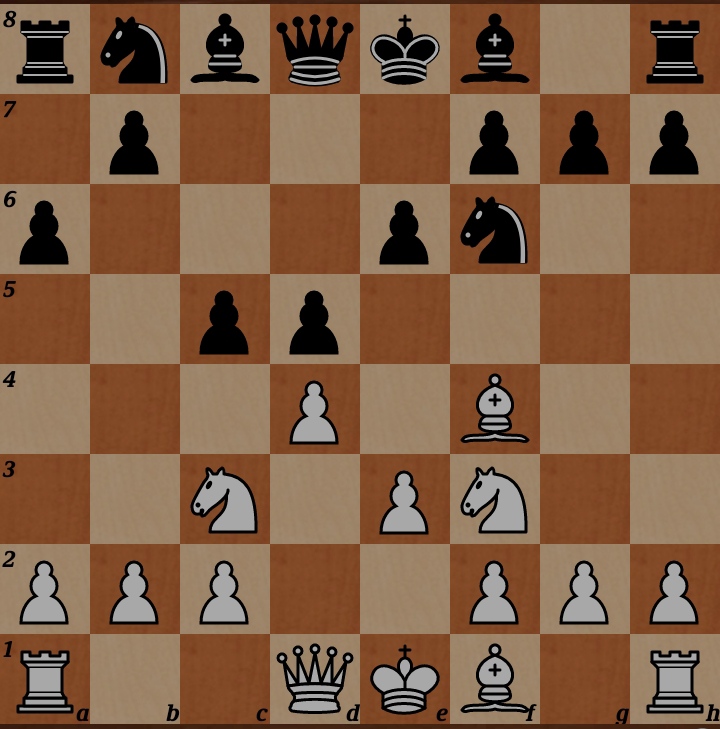
The Jobava resembles the classical London System in many ways. Most moves are shared across both openings. However, there is a key difference.....The queenside Knight in the Jobava develops to c3 instead of the more common d2. This changes the entire idea of "Pawn pyramid", i.e playing c3 and e3 to defend the d4 pawn and revolving the entire development around this pawn structure. Instead, white opts for a more dynamic position with a more active Knight on the queenside, which upon nessecity can shift to the kingside too. White can also gain the open e-file incase of the trade of pawns on d4. The open file also allows white to create a battery on the e1-h6 diagonal. White can also try to create a queenside attack with moves like Nb5 and c4.
On the otherhand, black has a very straight forward plan for queenside expansion with robust moves like a6 or a5, b5, Qa5 or Qb3, Rfb8 after castling, etc. Black can also undermine white's centre with the e5 pawn break. Black often fiencettos the dark Bishop to exert more pressure on the d4 pawn.
Traps in the Jobava London:
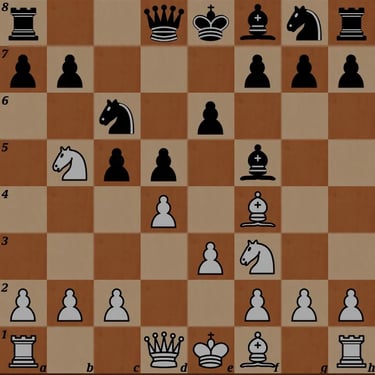
The Jobava London is infamous for being filled with many tricks and tips. One of the most famous traps is found early in the opening. If black chooses to develop normally with moves 1.d4 d5 2.Bf4 Bf5 3.e3 e6 4.Nc3 c5 5.Nf3 Nc6 6.Nb5......Here black doesn't have any good moves to defend against the fork on c7. However, it is worth mentioning that if white plays the same like before black commits the Knight on c6, black has a peculiar resource, which is Na6. As bad as it looks, it is a perfectly good positon for black after Na6.
The Main-Line:
The mainline of the Jobava London System include the following moves:
1.d4 d5 2.Bf4 Nf6 3. Nf3 e6 4.Nc3 c5 5.e3 a6.......and the game continues.
Alternatively, Black might also play g6 and Bg7 instead of e6. Black often plays a6 across most lines too. However, white does not have as many alternatives as black does in this opening